
Buying a used combination sewer truck can add a capable vacuum and jetting unit to your fleet for far less than new, but only if the machine underneath the paint is sound. These trucks earn most of their hours parked and working under load, so the usual road-truck checks miss what actually wears out. This checklist covers what to test, what to listen for, and which records to confirm before you buy. If you are weighing a new unit instead, the combination sewer truck buyer's guide covers selecting and spec'ing one; this post is for the used market.
Key Takeaways
- Hours matter more than mileage: A combination sewer truck does most of its work parked with the engine running, so engine hours and pump or PTO hours reveal far more about wear than the odometer does.
- Test the vacuum and water systems under load: A unit that idles fine can still hide a tired blower or a weak water pump, so insist on a full wet test with the vacuum and jetting systems working, not just a walkaround.
- Buy the records, not just the truck: Maintenance logs, the type of debris the unit handled (corrosive, non-hazardous, oil), and whether it was rinsed after each use tell you how hard its life has been.
- Confirm the federal annual inspection: A combination sewer truck is a commercial motor vehicle, so it must pass a periodic inspection at least once every 12 months, with the documentation carried on the truck.
- Match the engine setup to the work: Single-engine units are lighter and simpler to maintain, while dual-engine units separate driving power from vacuum power, which can matter for heavy, continuous cleaning.
- A reconditioned unit removes much of the guesswork: When a dealer service department has gone through a used truck system by system, you trade a slightly higher price for documented condition and support.
What Is a Combination Sewer Truck, and How Is It Different From a Standard Vacuum Truck?
A combination sewer truck pairs a powerful vacuum system with a high-pressure water jetting system on one chassis, so a single unit can both break debris loose and vacuum it out. A standard vacuum truck only handles the suction side. That two-in-one capability is what makes combination units the workhorses of sewer and storm line cleaning.
Brown Equipment Company has sold and serviced this equipment across the Midwest for decades, and the combination sewer cleaning trucks it carries are built by Sewer Equipment, not by the dealership. The jetting side can be configured several ways, and the trade-offs between trailer, van pack, and truck-mounted setups are covered in the guide to Mongoose jetter configurations. If you are still deciding between an all-in-one unit and a separate jetter, the comparison of combination units versus standalone jetters lays out the trade-offs.
Why Hours Matter More Than Mileage on a Used Combination Sewer Truck
On a combination sewer truck, mileage tells you almost nothing on its own. These units spend hours parked over a manhole with the engine running and the blower or water pump working hard, so a truck with low road miles can still have a heavily worn vacuum system. Engine hours and pump or PTO hours are the numbers that matter.
Use the three readings together to gauge how hard the unit has actually lived:
| Reading | What it measures | Why it matters on a combination unit |
|---|---|---|
| Odometer mileage | Road distance traveled | Misleading on its own; these trucks work stationary, so low miles can hide heavy use |
| Engine hours | Total engine run time | A truer picture of overall wear, since the engine runs during every cleaning job |
| Pump or PTO/blower hours | Time the vacuum and water systems ran under load | The closest measure of wear on the systems you are actually buying the truck for |
The Pre-Purchase Inspection Checklist: Six Systems to Test Before You Buy
A thorough pre-purchase inspection on a used combination sewer truck covers six systems, and each one can hide an expensive problem a quick walkaround misses. Work through them in order, and where you are unsure what you are seeing, have a qualified inspector or a dealer service department evaluate the unit first.
The same used-purchase method applies to other fleet equipment; the used street sweeper inspection checklist follows the same approach.
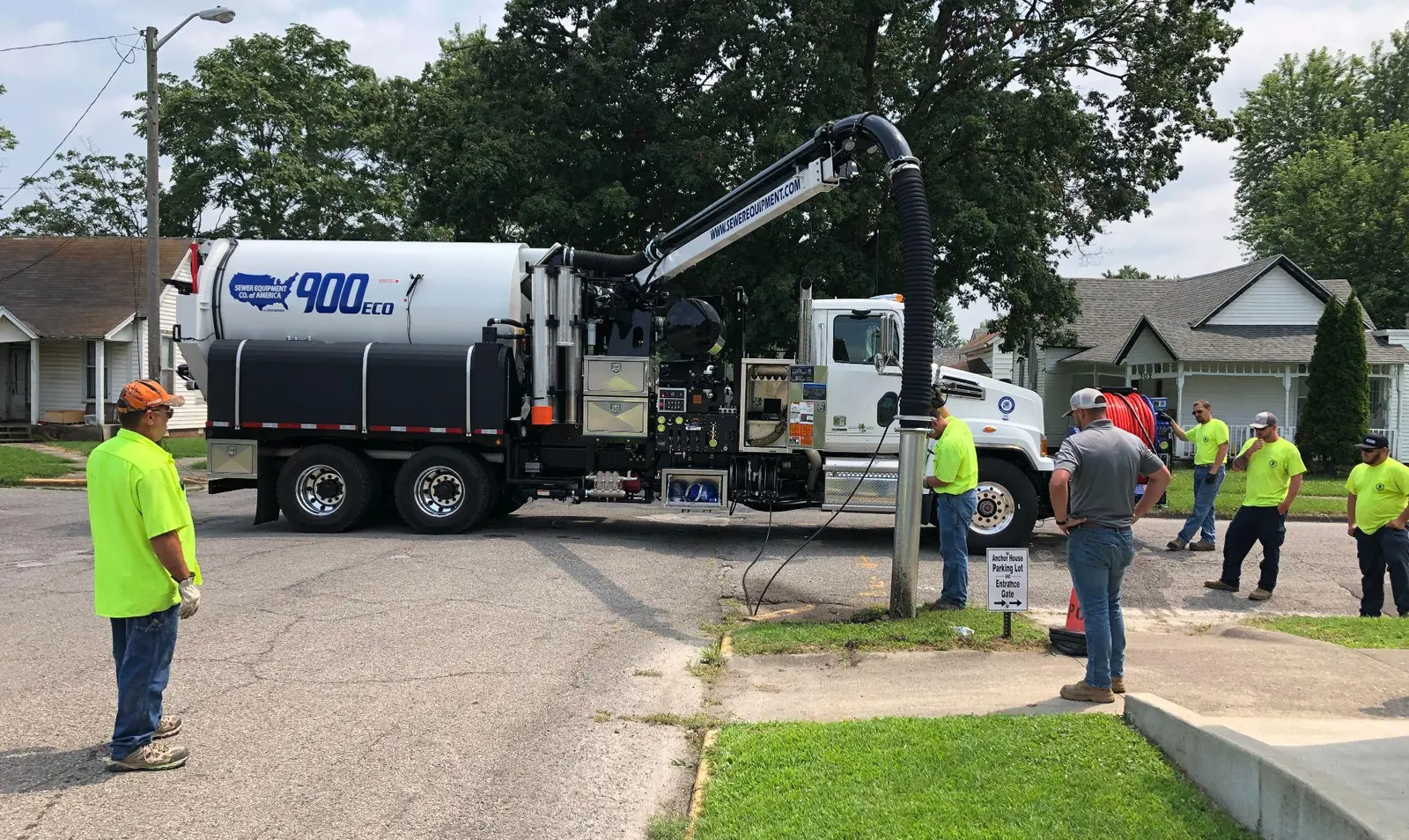 Inspect under load
- 1Vacuum & Blower System
- 2Water & Jetting System
- 3Hydraulic System
- 4Boom & Hose Reel
- 5Debris Body & Tank
- 6Chassis & DOT Status
Vacuum and Blower System
The blower is the heart of the truck and the most expensive single component to rebuild, so it gets the closest look. Run the unit through a full vacuum cycle and pay attention to how it sounds and how well it holds suction.
- Listen at the blower: A healthy positive-displacement blower runs with a steady whine. Knocking, grinding, or a rising squeal can point to worn bearings or lobe contact, which are costly to repair.
- Check suction and vacuum hold: Cap the inlet and watch how quickly the unit pulls vacuum and whether it holds. A slow pull, or a gauge that bleeds off, points to worn seals, a tired blower, or leaks in the debris body or hose.
- Inspect filtration: Clogged or bypassed filters often mean debris has reached the blower, which shortens its life. Ask when the filters were last serviced.
- Look for oil in the airstream: Oil misting from the blower exhaust is a warning sign of internal wear.
A blower rebuild can erase a bargain, so if anything sounds off, have a shop that services any brand or model assess it before you buy.
Water and Jetting System
The water system is what breaks the blockage loose, and it works at high pressure, so leaks and weak output show up fast under load. Run the jetting system at working pressure and watch the gauges and the plumbing.
- Run the water pump under pressure: Confirm the pump reaches its rated pressure and holds it. Pressure that surges or falls off can indicate pump wear, valve problems, or a failing relief valve.
- Inspect the hose reel and jetting hose: Look for cracked, bulged, or heavily abraded hose, and a reel that spools smoothly under power.
- Check tanks and plumbing for freeze damage: Look for cracks, prior freeze splits, and corrosion at fittings. Trucks that were not winterized properly often show split plumbing.
Some combination trucks recycle their own water to extend run time between fills, and those systems add components of their own to check. The breakdown of water recycling sewer cleaning trucks covers how that feature changes the maintenance and productivity picture.
Hydraulics
Hydraulics drive the boom, the hose reel, the debris body, and the rear door, so a weak or leaking system limits the whole truck. Cycle every hydraulic function and watch for slow, jerky, or noisy operation.
- Cycle every function: Raise and lower the boom, open and close the body, and run the reel. Movements should be smooth and reasonably quick, not slow or shuddering.
- Look for leaks and contamination: Check hoses, cylinders, and fittings for weeping or wet spots, and ask to see the hydraulic fluid. Milky or dark fluid points to neglect.
- Listen to the pump: Whining or a cavitation rattle under load can indicate a worn pump or a starved system.
Boom and Hose Reel
The boom and hose reel take constant stress and are common wear points. Check for play, cracks, and smooth motion through the full range.
- Check boom rotation and extension: The boom should swing and telescope through its full range without binding, grinding, or excessive play at the pivots.
- Inspect the suction tube and seals: Worn tube sections and leaking seals reduce suction right at the nozzle, where you need it most.
- Test the reel under power: The hose reel should pay out and retract evenly. Hesitation or slipping suggests a worn motor or chain.
Debris Body and Tank
The debris body holds wet, abrasive, and sometimes corrosive material, so it is one of the first places to corrode and crack. Inspect it inside and out, and pay special attention to trucks that handled corrosive or hazardous waste.
- Inspect for corrosion and thinning: Look inside the body for pitting, thin spots, and weld cracks, especially along the floor and the lower seams.
- Check the door seal and hinges: A worn tailgate seal leaks both vacuum and slurry. The door should close square and seal evenly all the way around.
- Confirm the dump and decant functions: Raise the body fully and run the decant or drain system to confirm there is no binding or leaking.
- Ask what it hauled: A unit that ran corrosive or oily waste, and was not rinsed after each use, will wear faster than one that handled routine sanitary debris.
Chassis, Cab, and DOT Inspection Status
The chassis carries everything, and because a combination sewer truck is a commercial motor vehicle, it is also subject to federal inspection rules. Check the frame, brakes, tires, and steering, then confirm the truck has a current annual inspection on file.
- Inspect the frame and undercarriage: Look for frame cracks, heavy rust, prior repairs, and signs of overload or collision.
- Check brakes, tires, and steering: These are core safety items and core federal inspection items. Uneven tire wear can also hint at alignment or suspension problems.
- Confirm the federal annual inspection: Federal rules require a combination sewer truck to pass a periodic inspection at least once every 12 months, with documentation carried on the vehicle. That inspection covers required components such as brakes, steering, suspension, lighting, tires, the frame, and coupling devices, as set out in the federal minimum inspection standards. Treat missing or expired paperwork as a reason to slow down.
One more thing to confirm is parts support. Ask whether OEM parts for the unit's blower, water pump, and jetting components are still available, since parts support varies by the age and brand of the truck.
Use this quick reference to keep the findings straight as you work through the truck:
| System | Acceptable | Red flag |
|---|---|---|
| Vacuum and blower | Steady whine, strong and steady vacuum hold | Knocking or grinding, slow vacuum pull, oil in the exhaust |
| Water and jetting | Reaches and holds rated pressure | Surging or falling pressure, cracked hose, freeze-split plumbing |
| Hydraulics | Smooth, quick functions; clean fluid | Slow or jerky movement, leaks, milky or dark fluid |
| Boom and hose reel | Full, smooth range; even reel travel | Binding, excessive pivot play, slipping reel |
| Debris body | Sound floor and seams; sealing door | Pitting, weld cracks, leaking tailgate seal |
| Chassis and DOT | Sound frame; current annual inspection | Frame cracks, heavy rust, missing or expired inspection paperwork |
Single-Engine or Dual-Engine: Which Configuration Fits Your Operation?
Single-engine combination trucks use the chassis engine to power both driving and the vacuum and water systems, while dual-engine trucks add a second engine dedicated to the cleaning systems. Single-engine units are lighter and simpler to maintain. Dual-engine units can run the cleaning systems hard for long stretches without tying up the drive engine.
| Factor | Single-engine | Dual-engine |
|---|---|---|
| Maintenance | One engine to service and track | Two engines to service and track hours on |
| Weight and payload | Lighter, often more debris payload | Heavier, which can reduce payload |
| Continuous heavy cleaning | Capable, but ties up the drive engine | Designed for long, continuous cleaning cycles |
| Operating cost | Generally lower | Generally higher |
Neither setup is automatically better. Match the configuration to how your crews actually use the equipment, weighing continuous heavy cleaning against simpler maintenance and lower operating cost.
Documentation and Records to Verify Before You Buy
The paperwork on a used combination sewer truck is as important as the metal. Before you buy, confirm the maintenance history, the type of service the unit ran, and a current federal annual inspection. Missing records are themselves a red flag.
Ask the seller for the following, and be cautious about any unit that cannot produce them:
- Maintenance logs and the date of the last major service or overhaul
- The type of debris the unit handled (corrosive, non-hazardous, oil, and so on)
- Evidence that the truck was cleaned out after each use
- The current annual federal inspection report
A service department weighing a used truck looks hardest at four things: the maintenance logs, the age of the unit, the type of service it ran (corrosive, non-hazardous, oil), and whether it was cleaned out after each use. Those answers reveal most of how the truck was treated. Knowing how these trucks are run and maintained day to day, covered in the guide to using sewer cleaning trucks for maintenance, makes it easier to judge whether a unit's history adds up.
On the regulatory side, because a combination sewer truck is a commercial motor vehicle, federal rules require a passing annual periodic inspection within the previous 12 months, with documentation kept on the truck. Ask to see that paperwork, and confirm the date, before closing.
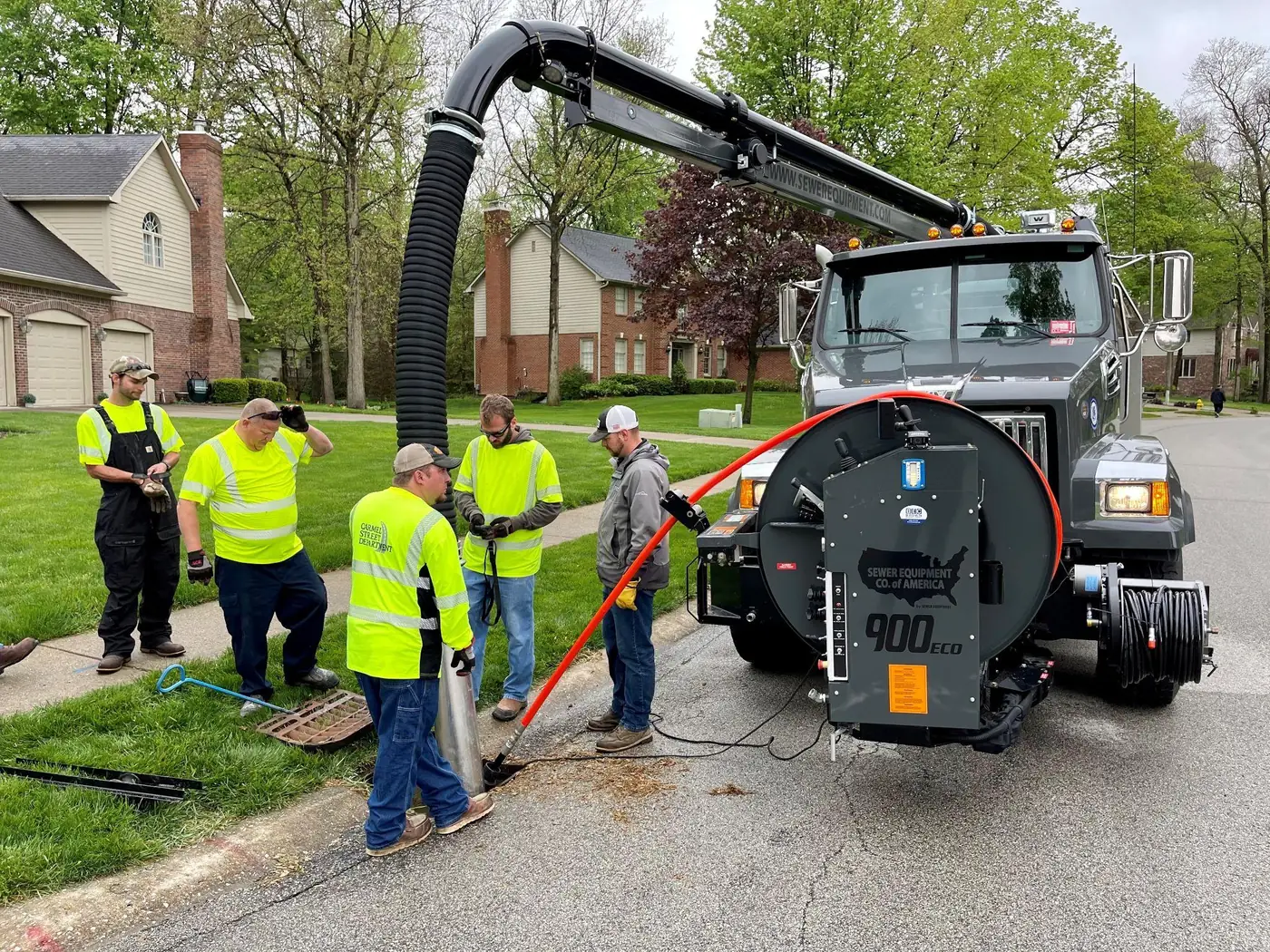
When a Reconditioned Combination Sewer Truck Makes More Sense
If working through this checklist alone sounds like a lot, a reconditioned unit is the lower-risk alternative. A reconditioned combination sewer truck has been gone through system by system by a service department, so its condition is documented and supported. With a private-party sale you inherit the unknowns; with a reconditioned unit, the wear items have already been addressed.
Brown Equipment Company has run an in-house reconditioning operation for years, and has served Midwest fleets since 1968, so a used unit can be inspected, repaired, and brought back to working condition before it reaches you. The decision between reconditioning and buying new is worth weighing on its own terms, and the guide to when to recondition instead of replace walks through that trade-off.
If you are not ready to commit to a purchase at all, renting a unit first can be a low-commitment way to confirm that a given configuration fits your crews before you invest in it.
Frequently Asked Questions About Used Combination Sewer Trucks
How many engine hours versus vacuum hours should I look for in a used combination sewer truck?
There is no single magic number, because the right range depends on the engine, the brand, and how the unit was maintained. What matters more is the relationship between the two readings: a truck with low engine hours but very high pump or PTO hours has done a lot of stationary cleaning, and that wear lands on the vacuum and water systems you are buying it for. Weigh hours against the maintenance records, not the odometer.
Are used combination sewer trucks with high mileage worth buying?
High mileage alone should not rule a truck out. Because these units do most of their work parked, mileage is a weak indicator of condition, and a high-mileage truck with low pump hours and strong maintenance records can be a better buy than a low-mileage truck that was run hard and neglected. Judge the unit by its hours, its systems under load, and its paperwork.
Do I need a commercial driver's license to operate a combination sewer truck?
Most full-size combination sewer trucks exceed the weight thresholds that require a commercial driver's license, so in practice your operators will usually need a CDL. Some smaller, non-CDL units exist for lighter work. Confirm the specific truck's gross vehicle weight rating and your state's licensing rules before you buy.
Should I get an independent inspection before buying a used sewer truck?
Yes, an independent inspection is worth it on any used combination sewer truck, and especially on a private-party purchase. A qualified inspector or a dealer service department can test the vacuum, water, and hydraulic systems under load and catch problems that are easy to miss in a walkaround. The cost is small next to a blower or pump rebuild discovered after the sale.
What are the most common mechanical failures on used combination sewer trucks?
The most expensive and common problems show up in the blower, the water pump, the hydraulics, and the debris body. Worn blower bearings, a water pump that no longer holds pressure, hydraulic leaks, and a corroded or cracked debris body are the failures that most often turn a cheap truck into an expensive one. Each is exactly what a load-tested inspection is designed to surface.
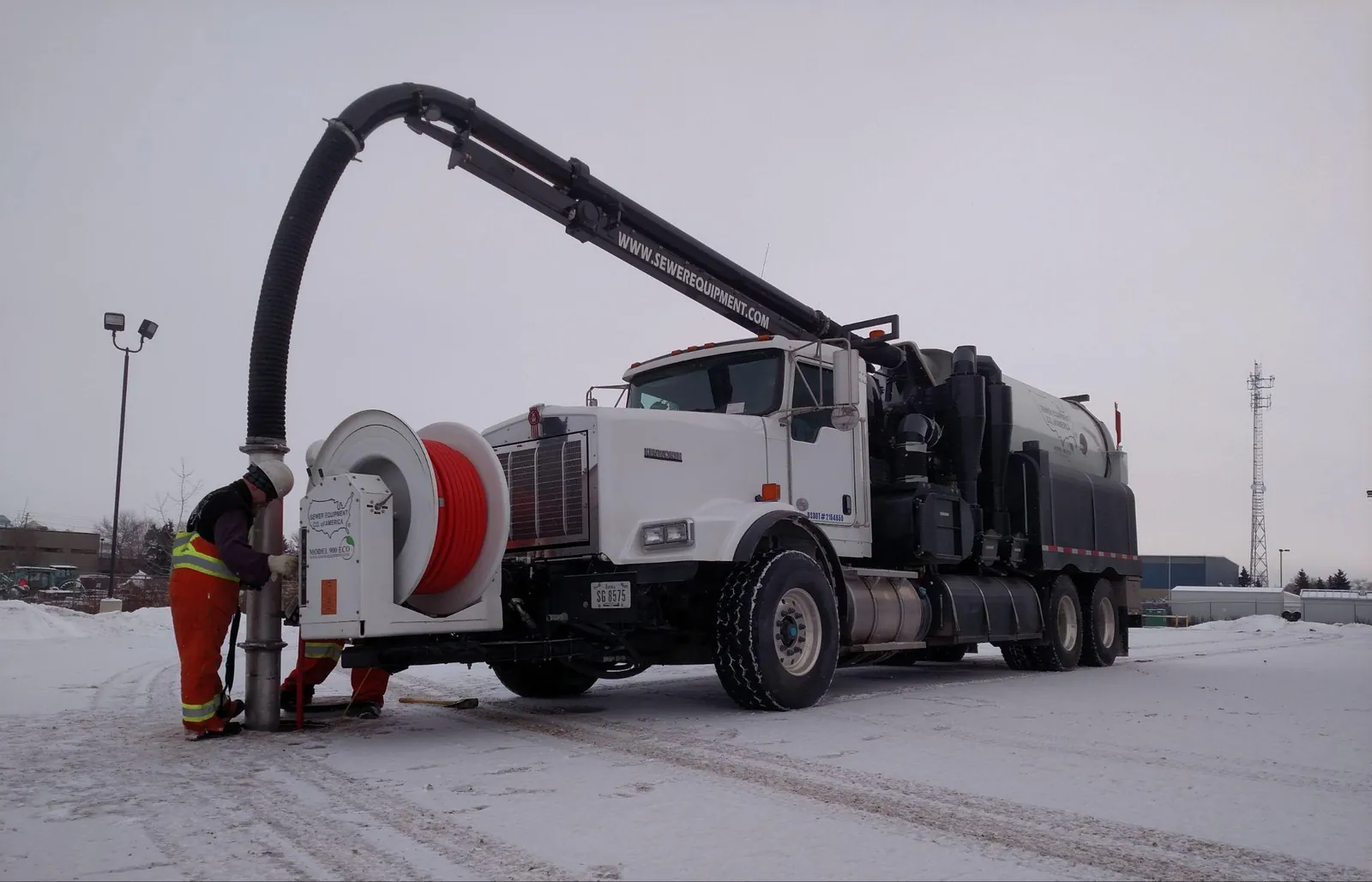
Buy on Hours, Systems, and Records
A used combination sewer truck can be a smart way to add capacity without paying for new, as long as you buy on hours, systems, and records rather than on price alone. Working through this checklist, or having a service department do it with you, is what separates a real bargain from a budget drain.
If you want a second set of eyes on a used unit, or you would rather browse discounted and in-stock equipment, reach out to the Brown Equipment Company team to talk through your options.
Want help finding the right equipment?
Drop your name and number. A consultant will call you back, typically within one business day, to talk through what fits your operation.